Ballooning World
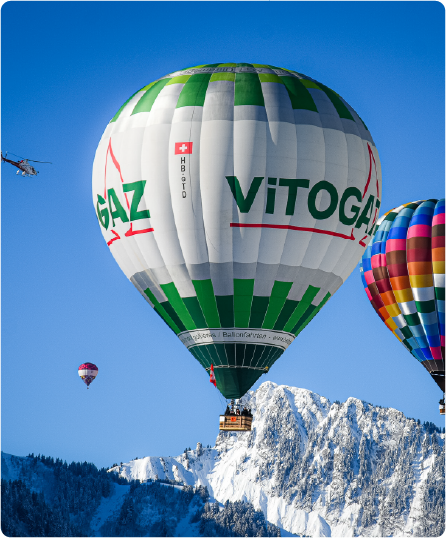

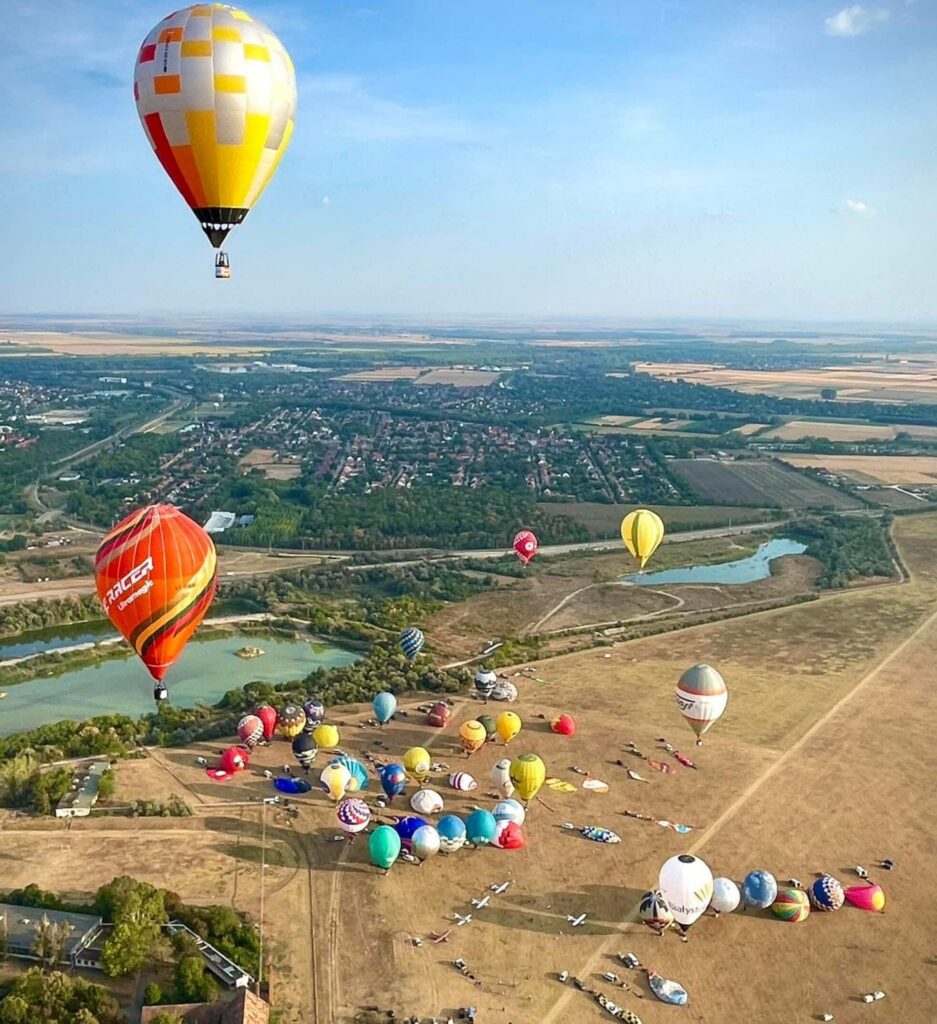
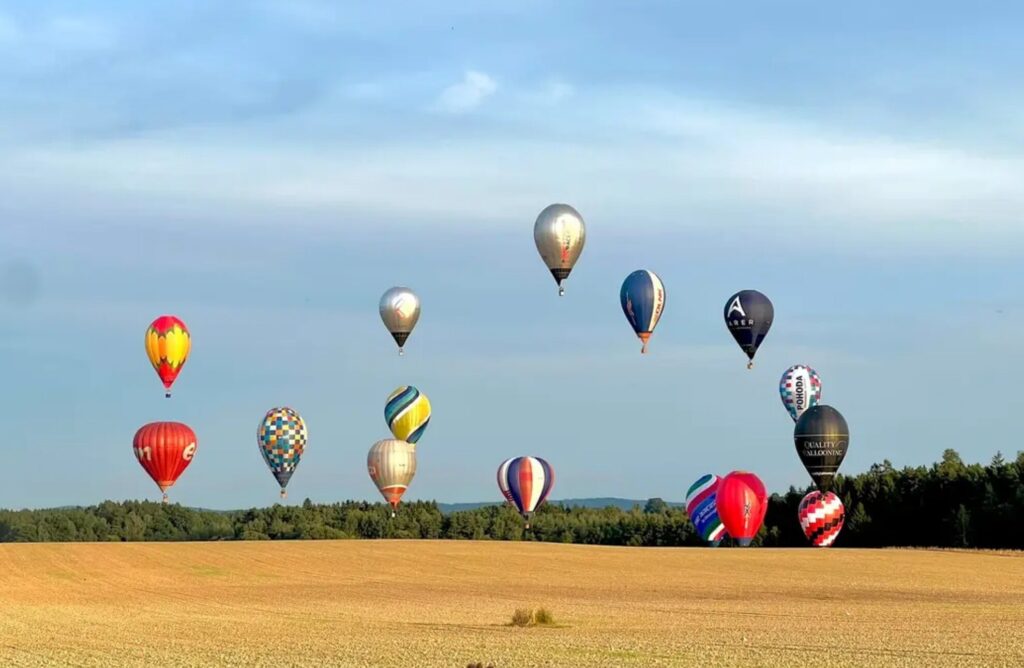
As a pilot becomes more experienced, it can be fun to share flights with others at festivals or competitions. These events bring many balloons into the air at once, a spectacular sight for participants and the general public alike.
Most festivals include some kind of competition. It is usually a friendly, low-key contest with a small prize or trophy. However, at some of the more heavily sponsored events these prizes can be quite substantial, often consisting of considerable sums of money, a car or even a new balloon.
This kind of big-prize event usually involves pilots taking off from outside the public area and approaching the arena to grab a set of keys from a pole planted in the ground, 10 to 20 feet high (3 to 6 m). For obvious reasons, this task is called the Key Grab.
Even so, the most popular competition task at these events is the chase (Hare and Hounds). In it, one balloon (the hare) takes off and the rest of the balloons (the hounds) chase it and try to land as close as possible. Dropping a marker where the hare has landed also counts.
The main purpose of festivals is the care and safety of the balloons for the benefit of pilots, crew and the general public, where everyone can have fun in a safe way.
There are other, more specialised events where the main objective is to test the pilot’s skills. These are competitions, races or Grand Prix events and, in most cases, they determine a local, national or international champion or contribute to that result.
How do these competitions work?
There must be an organiser who sets the tasks before each flight, usually the competition director. The rules must be written down and handed to all participants, and the official observers must take up their positions. Over the years, competition directors have devised a number of extremely difficult tasks for pilots. Pilots who do not follow the rules lose points. So flying very well is not, by itself, what determines the winner.
Great command of every aspect of the flight is required. Knowing the rules, exact navigation and plotting the target. All this makes it even more exciting. Targets are usually road junctions and are identified by map coordinates.
When there is more than one target, the second is designated by the pilot during the flight and written on the marker, and so on if there are more targets. The coordinates of the first target must be declared before take-off. So it is easy to see how simple it is to make a mistake noting the coordinates or choosing the target. This is an area where points are often lost.
At the end of each flight, the competition director together with the observers determines the winner and all the other positions at that point in the competition.
What are balloon competitions and races?
Balloon competitions and races do not work like motor or sailing races, where the winner is the first to cross the line. Balloon competitions consist of winning one or more tasks.
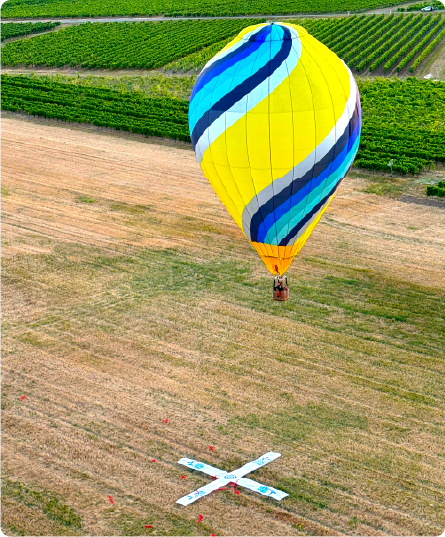
There is a great variety of tasks, but most involve hitting a target with a baton or marker at a given point, a goal or an X mark. The throws are measured and scored by previously designated observers on the ground. Whoever gets closest to the target wins.
This kind of competition requires great skill in reading and using the winds at different altitudes to keep the balloon close to the target. At some levels of competition, pilots have shown such skill that, after flying for 30 minutes or more and covering fairly long distances, they have dropped the marker right at the centre of the target. Often the distance between the markers of the top four finishers is a matter of millimetres or fractions of a yard.